
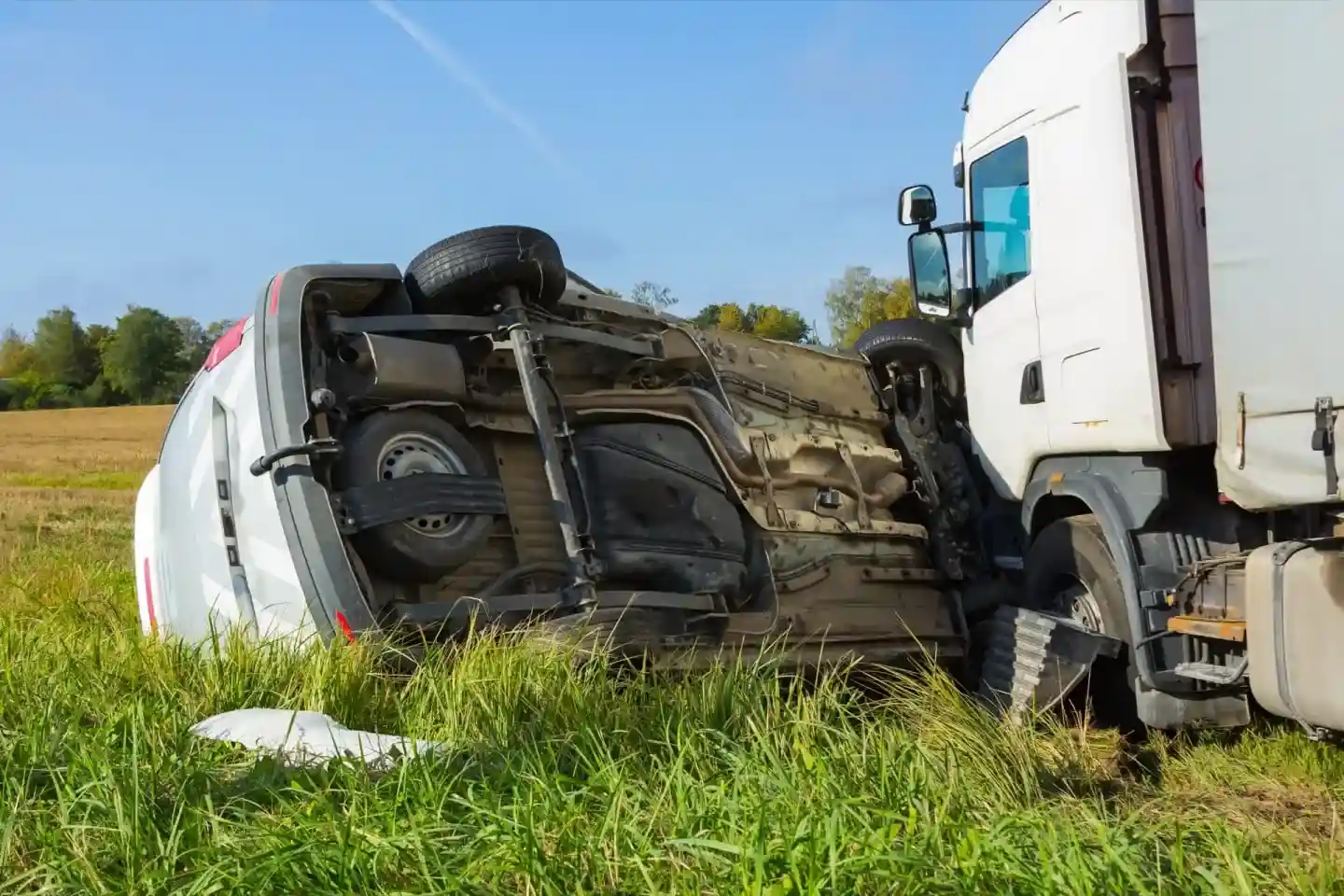
A truck accident attorney at Hipskind & McAninch investigates crashes involving semi trucks and commercial vehicles across Belleville and the surrounding Metro East, working to identify every party whose negligence contributed to the wreck. Truck accident claims often involve federal safety regulations that a standard car accident claim never touches.
A truck accident claim does not run on the same track as a two-car crash, and treating it that way costs injured people money. The truck driver is rarely the only party who caused the wreck. Federal regulations govern how long that driver could legally be on the road, and a separate set of rules governs how the truck itself was supposed to be maintained.
Hipskind & McAninch represents truck accident victims across Belleville, Edwardsville, and the Metro East, and multimillion-dollar trucking cases sit among the firm’s top priorities. Call 618-641-9189 for a free case review.
What Multimillion-Dollar Trucking Litigation Requires From a Law Firm

Brady McAninch, Belleville Truck Accident Attorney
Brady McAninch and John Hipskind built their trucking practice on litigation readiness, not just negotiation skill. A firm that settles every case for whatever a carrier’s insurer offers rarely gets the carrier’s full attention.
That readiness matters because trucking companies and their insurers carry far larger policy limits than a typical driver, and they defend claims accordingly. McAninch and Hipskind spent years on the defense side of these disputes before shifting to represent injured clients, and that background shapes how the firm approaches evidence preservation from the first phone call.
The firm has recovered more than $50 million for clients and takes cases to trial when a fair settlement isn’t on the table.
What Makes a Truck Accident Claim Different From a Car Accident Claim?
A truck accident claim involves more potential defendants than a standard car crash, since liability may extend beyond the driver alone. That difference changes how a case gets investigated from day one.
A few factors set trucking claims apart from ordinary auto accident claims:
- Federal regulations govern the driver’s hours behind the wheel, not just state traffic law.
- The trucking company may share liability for hiring, training, or supervision failures.
- A separate maintenance contractor may be responsible if mechanical failure caused the crash.
- Cargo loading errors can shift a truck’s weight distribution and cause a rollover.
- Black box and electronic logging data exist for commercial trucks in a way they don’t for passenger cars.
These added layers mean a trucking claim often takes longer to fully investigate than a typical two-vehicle crash. That extra time spent identifying every liable party is usually what separates a modest settlement from one that reflects the full scope of an injury.
Why Do Federal Hours of Service Rules Matter After a Crash?
Federal Hours of Service (HOS) regulations limit how long a commercial truck driver may legally drive before resting, and violations of these rules show up in fatigue-related crashes more often than most people expect. These rules are set by the Federal Motor Carrier Safety Administration (FMCSA) under 49 CFR Part 395.
| HOS Rule | Limit |
|---|---|
| Maximum driving time | 11 hours after 10 consecutive hours off duty |
| Driving window | 14 consecutive hours on duty |
| Required break | 30 minutes after 8 cumulative hours of driving |
| Weekly on-duty limit | 60 hours in 7 days or 70 hours in 8 days |
A driver who exceeds these limits is operating outside federal law, and electronic logging devices generally record that data automatically. That data becomes central evidence when a fatigued driver is the likely cause of a crash, but it does not stay available indefinitely.
What Evidence Disappears Fastest After a Trucking Accident?
Electronic logging device data, dashcam footage, and black box recordings from a commercial truck are often overwritten or deleted on a routine schedule set by the trucking company itself. Acting quickly to preserve this evidence changes what a case can prove later.
A few types of evidence carry short shelf lives in a trucking claim:
- Electronic logging device (ELD) data showing the driver’s hours in the days before the crash.
- Black box or event data recorder information capturing speed and braking in the seconds before impact.
- Dashcam footage from the truck or nearby vehicles.
- Maintenance and inspection records required under 49 CFR Part 396.
- Driver qualification files showing training and prior safety violations.
A formal preservation letter sent to the trucking company early in a claim can stop this evidence from being routinely deleted. Waiting even a few weeks may mean this evidence is gone before a case gets built.
Who Can Be Held Liable After a Belleville Truck Accident?
More than one party shares liability after a truck accident, depending on what caused the crash. Identifying every liable party affects both how a case is built and what compensation may ultimately be available.
Potential liable parties in a Metro East trucking case include:
- The truck driver, if speeding, fatigue, or distraction caused the crash.
- The trucking company, if negligent hiring, training, or scheduling contributed to the wreck.
- A third-party maintenance contractor, if mechanical failure played a role.
- A cargo loading company, if improper loading caused a rollover or shifted weight during transport.
- A parts manufacturer, if a defective component such as brakes or tires failed.
Each of these parties may carry separate insurance coverage, which matters directly to how much compensation is realistically available in a serious injury case.
What Should You Do After a Serious Truck Accident?
Once you’re home and receiving medical care, a few steps in the days following a truck accident protect both your health and your claim. This guidance covers what to do after the immediate scene, not the moments right after impact.
- Request the trucking company preserve all ELD, dashcam, and maintenance records tied to the crash.
- See a doctor promptly even if injuries seem minor, since some trauma from high-impact crashes surfaces later.
- Keep every medical record and bill connected to the crash organized in one place.
- Avoid speaking with the trucking company’s insurance representative before consulting an attorney.
- Photograph vehicle damage, road conditions, and any visible cargo or mechanical issues if it’s safe to do so.
Trucking companies and their insurers often begin their own investigation within days of a serious crash. Matching that pace on the injured side is part of what protects the value of a claim.
How Long Do You Have to File a Truck Accident Claim in Illinois?
Illinois gives most truck accident victims two years from the date of the crash to file a lawsuit, under 735 ILCS 5/13-202. That deadline runs independently of any evidence preservation window, which is often far shorter.
Two years may sound like enough time, but ELD data and dashcam footage rarely last that long without a formal preservation request. Acting early protects both the legal deadline and the physical evidence a strong claim depends on.
How Do Multiple Insurance Policies Affect a Trucking Case?
A serious trucking accident involves more than one applicable insurance policy, since the driver, the trucking company, and any third-party contractor may each carry separate coverage. Commercial trucking policies also tend to carry far higher limits than a standard auto policy, sometimes reaching into the millions.
That layered coverage creates both opportunity and complexity. A few questions need answers before a case can be valued accurately:
- Does the trucking company carry a primary policy, an umbrella policy, or both?
- Was the truck leased, and if so, does the leasing company carry separate coverage?
- Did a broker or freight company bear any responsibility for the load, and do they carry their own policy?

FAQ for Truck Accident Attorney Belleville
You may be able to pursue a claim against the trucking company directly, depending on how the crash happened and whether the company’s own negligence contributed. Employer liability extends beyond the driver alone in trucking cases.
You can still file a claim in Illinois if the crash occurred here, even if the trucking company is based elsewhere. Jurisdiction typically follows where the crash happened, not where the company is headquartered.
Truck accident claims involve higher potential damages because injuries from a commercial vehicle crash tend to be more severe, and multiple insurance policies from different liable parties may apply. Case value depends on medical costs, lost income, and the extent of long-term injury.
Maybe, depending on how contested the cause of the crash is and how much evidence exists from ELD or black box data. Serious trucking cases frequently involve expert analysis to establish exactly what happened.
A semi-truck accident claim generally involves federal safety regulations, multiple potentially liable parties, and higher policy limits than a standard car accident claim. These differences typically make trucking cases more complex to investigate and value.
Yes, you may still recover compensation in Illinois as long as you were not more than 50 percent at fault for the crash. Your recovery is reduced by your percentage of fault rather than eliminated entirely.
Yes, federal regulations require trucking companies to maintain certain maintenance and driver qualification records, though retention periods vary by record type. A formal preservation request helps make sure these records aren’t destroyed before a claim is filed.
The trucking company may still share liability depending on the level of control it exercised over the driver’s work, even if the driver was technically an independent contractor. This distinction often requires legal review specific to the facts of the case.
Nothing upfront. Hipskind & McAninch works on contingency, meaning payment comes only from a portion of what is recovered, with a baseline fee of 33 percent that may vary by case.
Take the First Step Toward Holding Every Liable Party Accountable
A trucking company’s insurer starts building its defense the moment it learns about a crash, often before an injured person has even seen a doctor. Hipskind & McAninch works to identify every party whose negligence contributed to a Belleville truck accident, from the driver’s logbook to the maintenance contractor’s records. Call 618-641-9189 to talk through what happened and what evidence needs to be preserved now.